The Knight Standing Guard, between Our mind and Our Heart
How our inner protectors sever our connections, and what it takes to reclaim true empathy, first for ourselves, and in turn for others
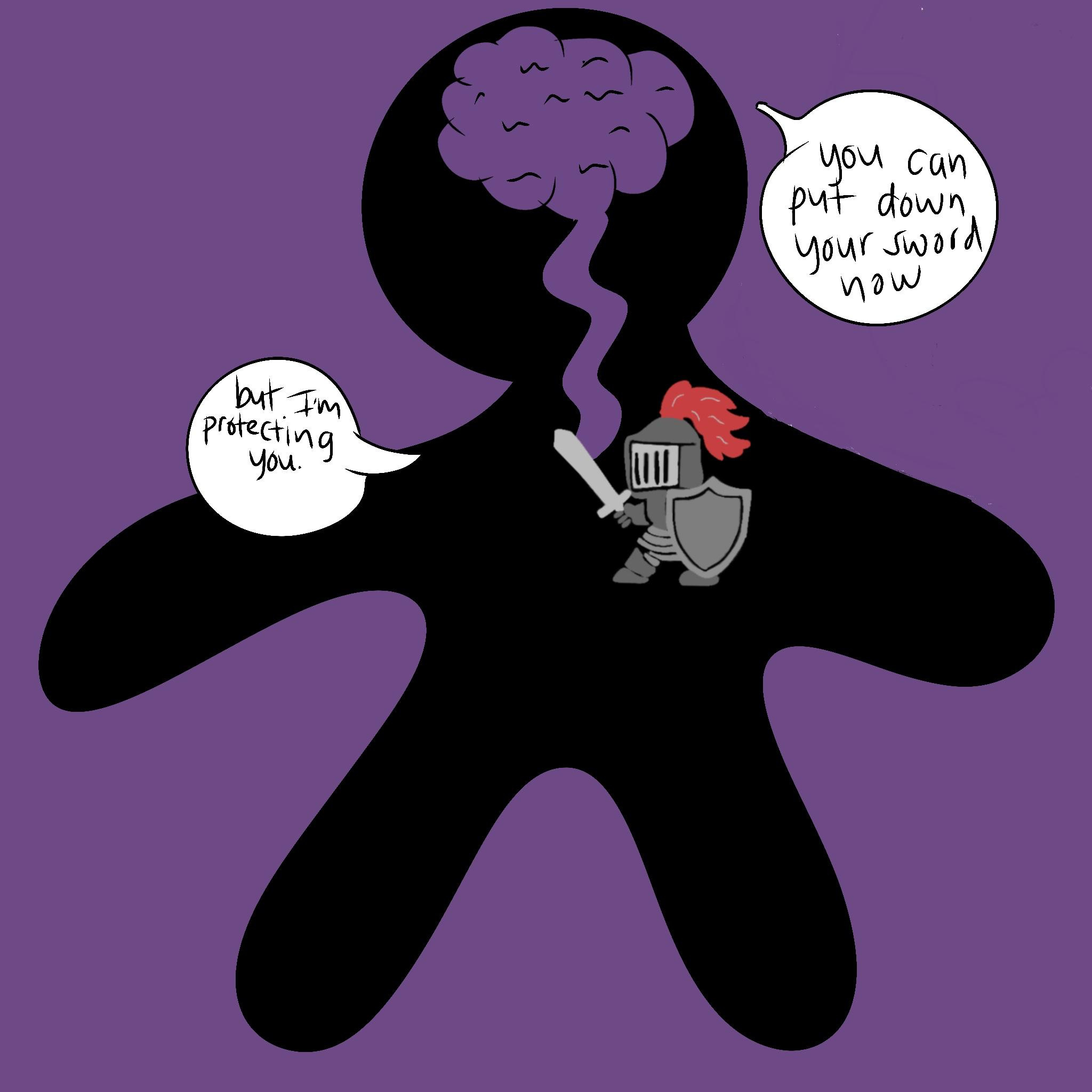
This piece was born out of a very real moment in my own therapy, but the story of the father, the grandmother, and the little girl is an emotional metaphor. It’s a blend of my own emotional experiences, the universal struggles we all face, and a broader look at how trauma moves through families. It explores the universal ways we all build armor to protect ourselves—and how the key is to find a way to let the pain finally pierce us in order to fully be connected to ourselves and those we love.
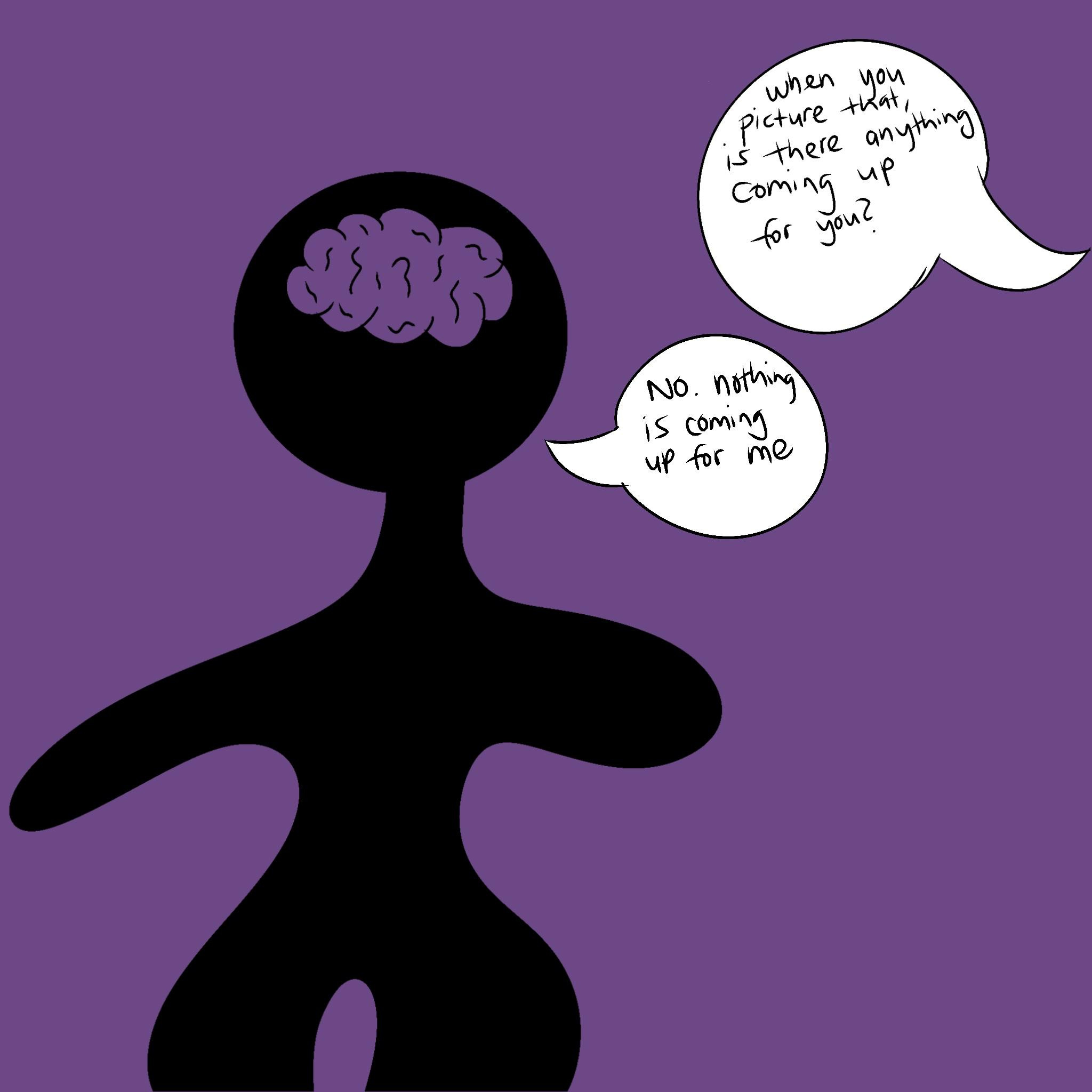
Sitting in therapy,
floating free,
But not feeling a damn thing
inside of me.
While all I can feel is an empty space,
There is something buried beneath this face.
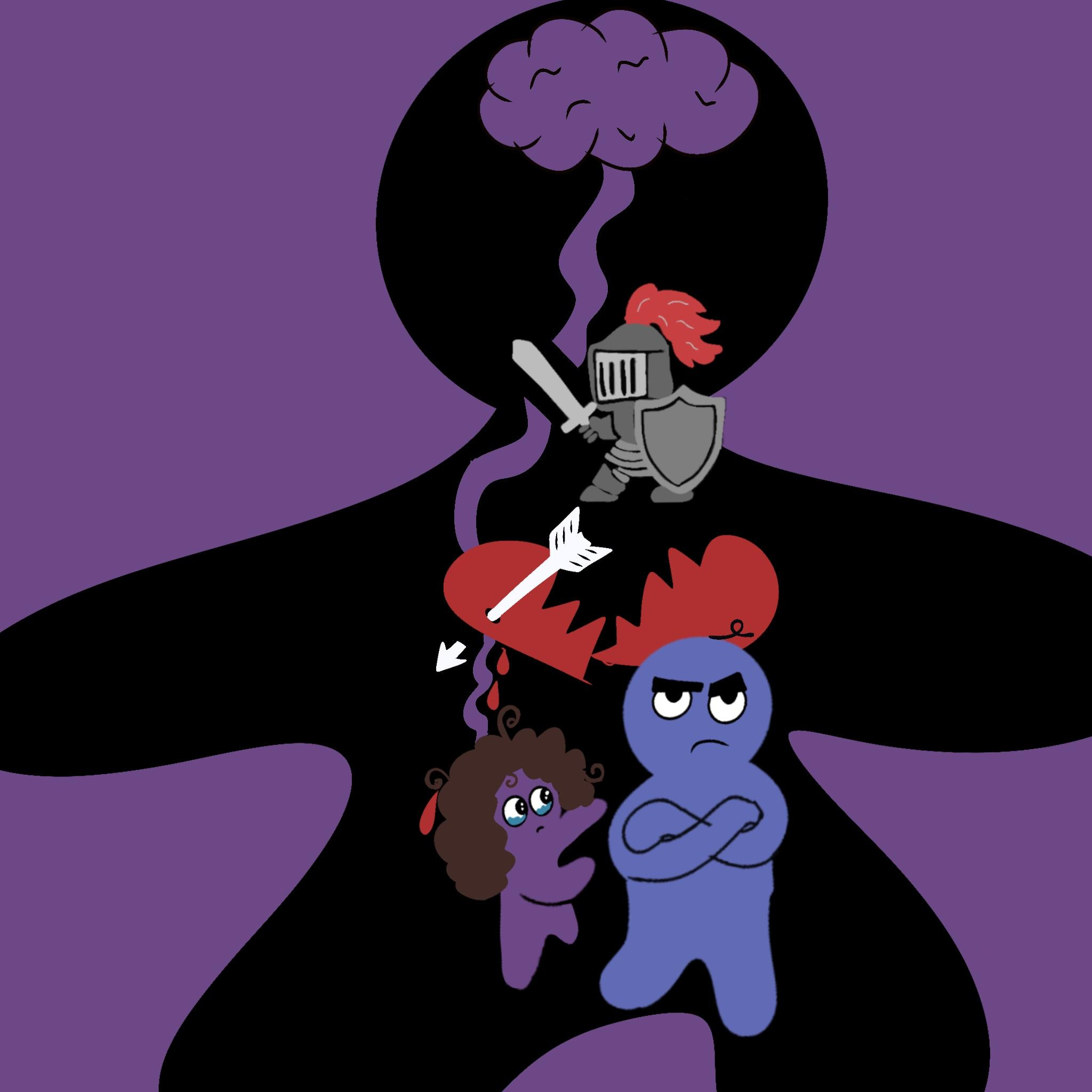
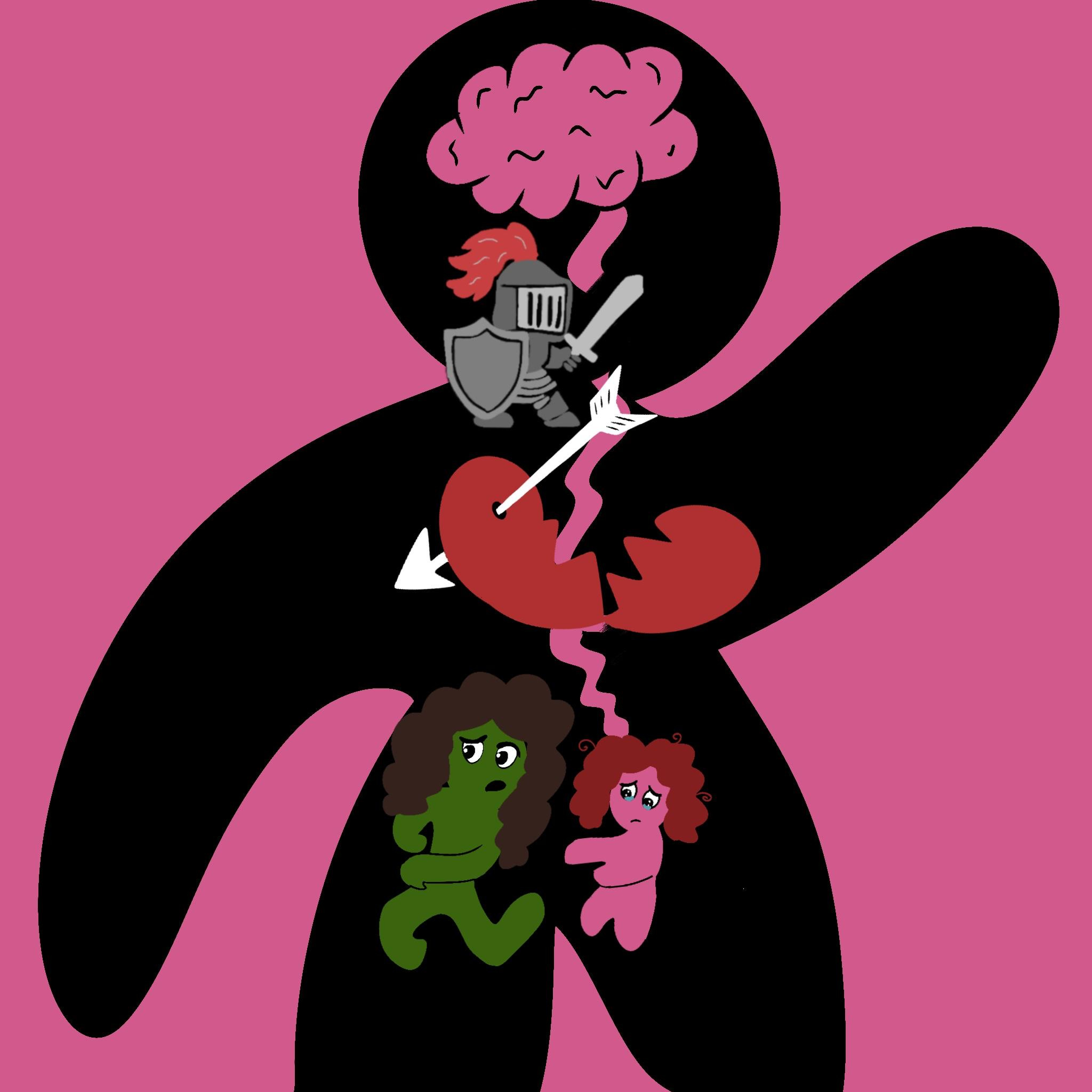
A knight stands right in my way,
Cutting me off from what my heart has to say.
A feeling trapped deep inside:
A little girl just wanted her dad’s pride.
But not feeling she’s enough,
Or truly worthy of his love.
An arrow shot through her heart,
Keeping her mind and body apart.
Her heart stuck,
bleeding in time,
Cut off from the little girl no longer in her mind.
It’s no wonder she couldn’t feel or really heal,
Her mind can’t be aware of the pain the knight conceals.
While that little knight kept her safe,
Protected her from the grief and the ache,
Allowed her to belong,
So she wouldn’t feel she had something inherently wrong.
He is no longer helpful to her needs,
So for his surrender, she gently pleads.
She pays him thanks for all he got her through,
But she’s strong enough now;
she knows what to do.
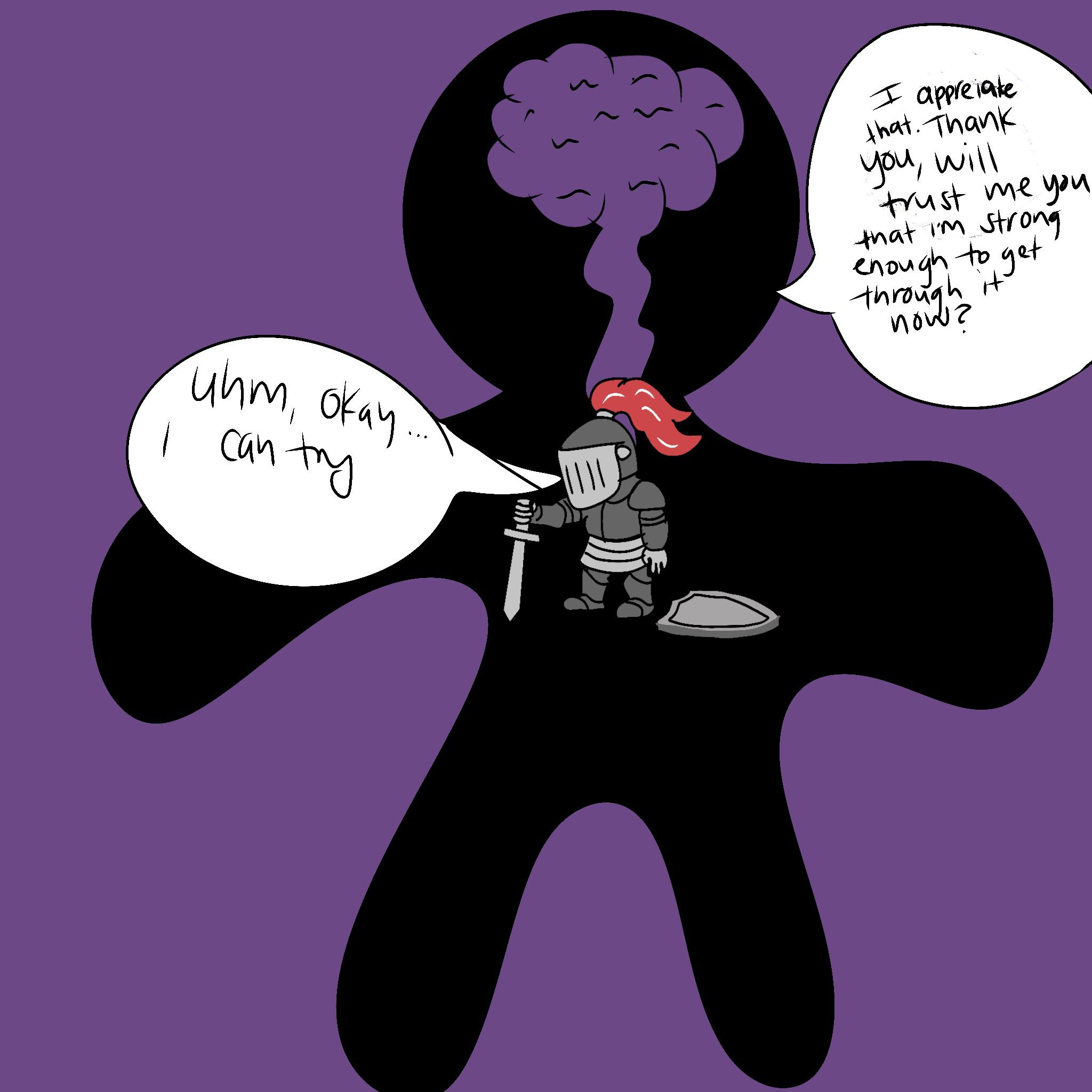
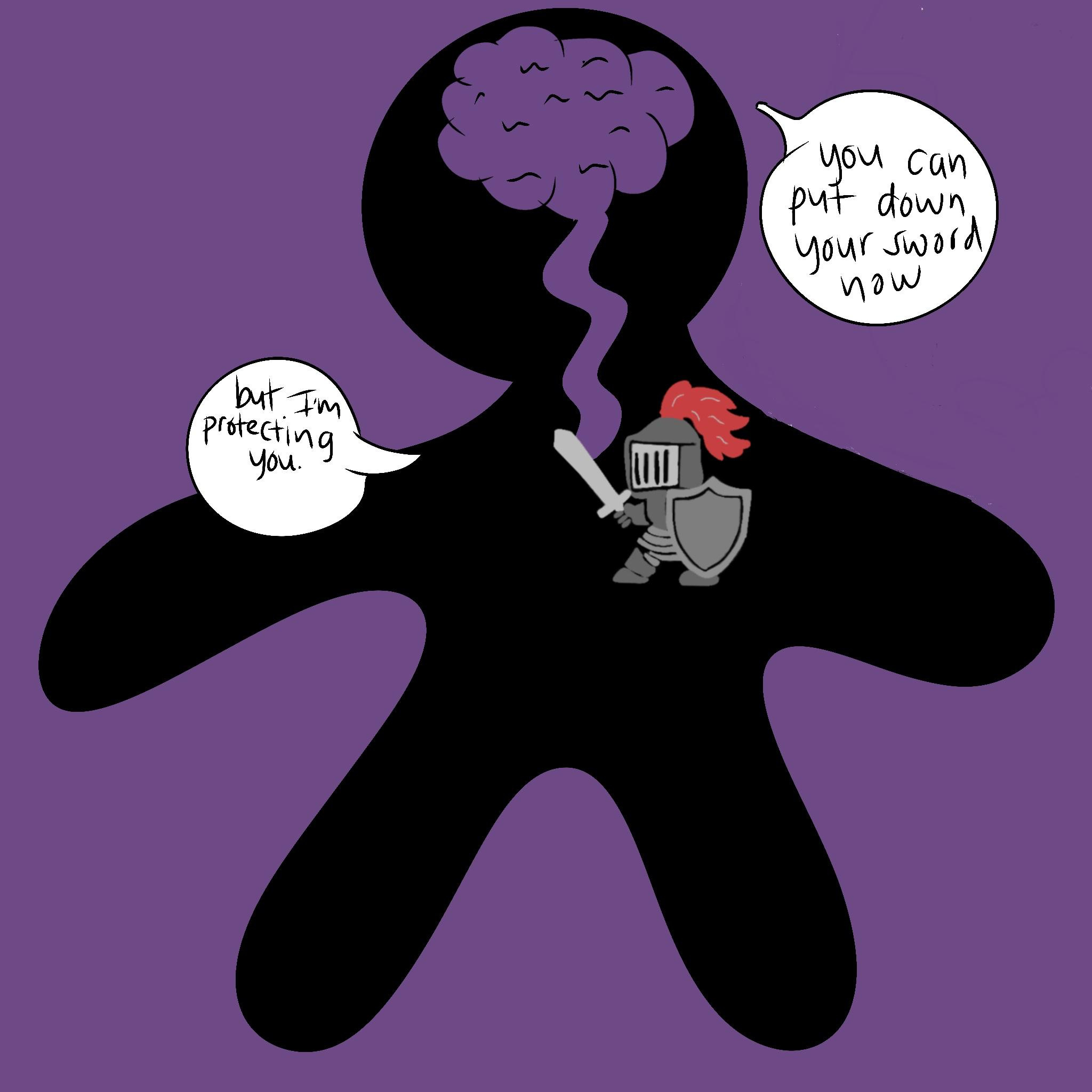
The knight drops his sword,
and his shield with it, too.
The connection’s no longer severed;
she can finally feel what her heart went through.
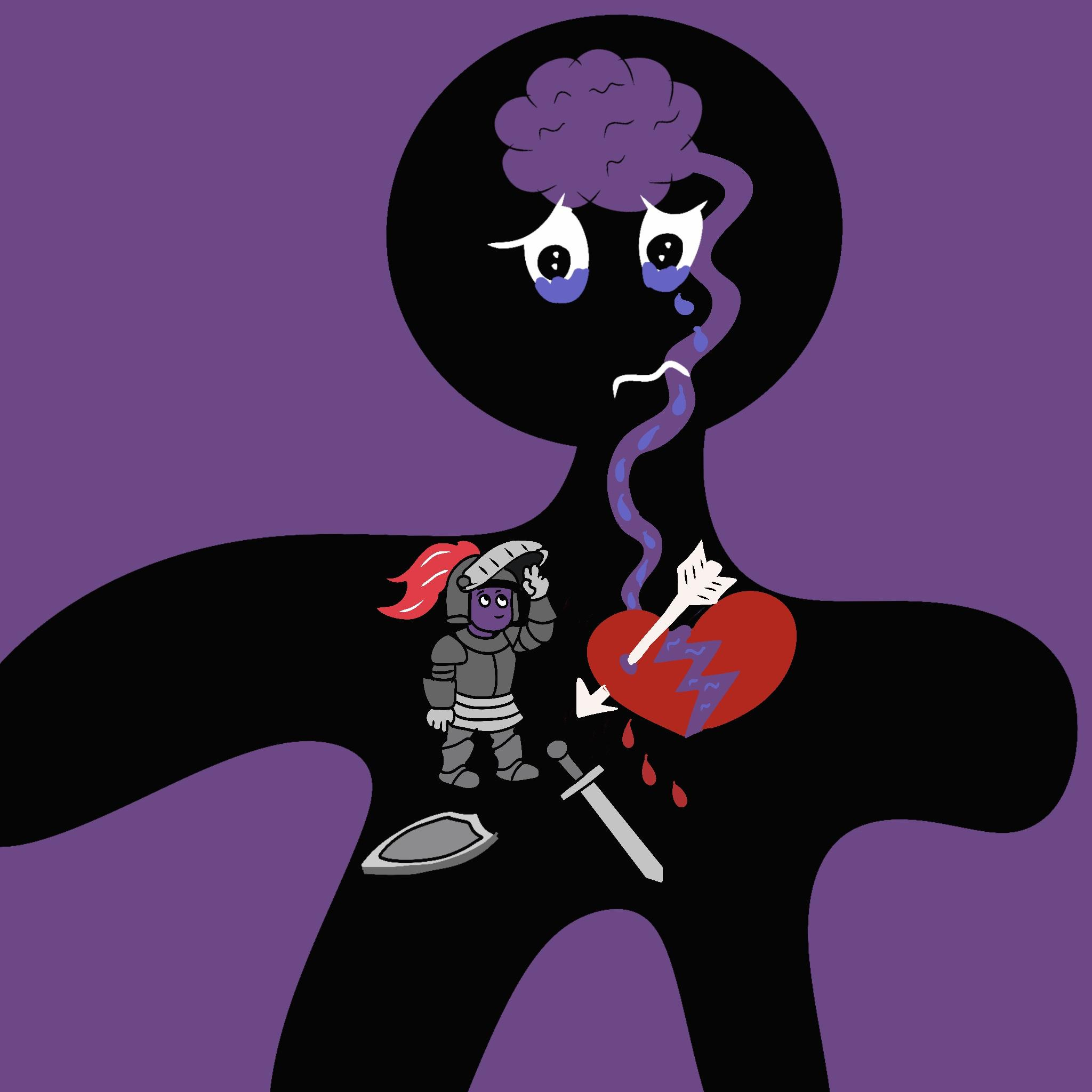
The knight lifts the armor’s mask to reveal his true face
And all along, it was herself, standing in that space.
Pain from knowing she severed the tie with herself,
Pain from the years she put her heart on a shelf.
Pain from leaving herself, from changing to belong,
Pain from chasing love from others just to fill that hole all along.
That connection from mind to heart is flowing free,
And her heart begins to fill with her own purple energy.
In that path, her tears fall like a stream,
For all the versions of herself she was forced to be.
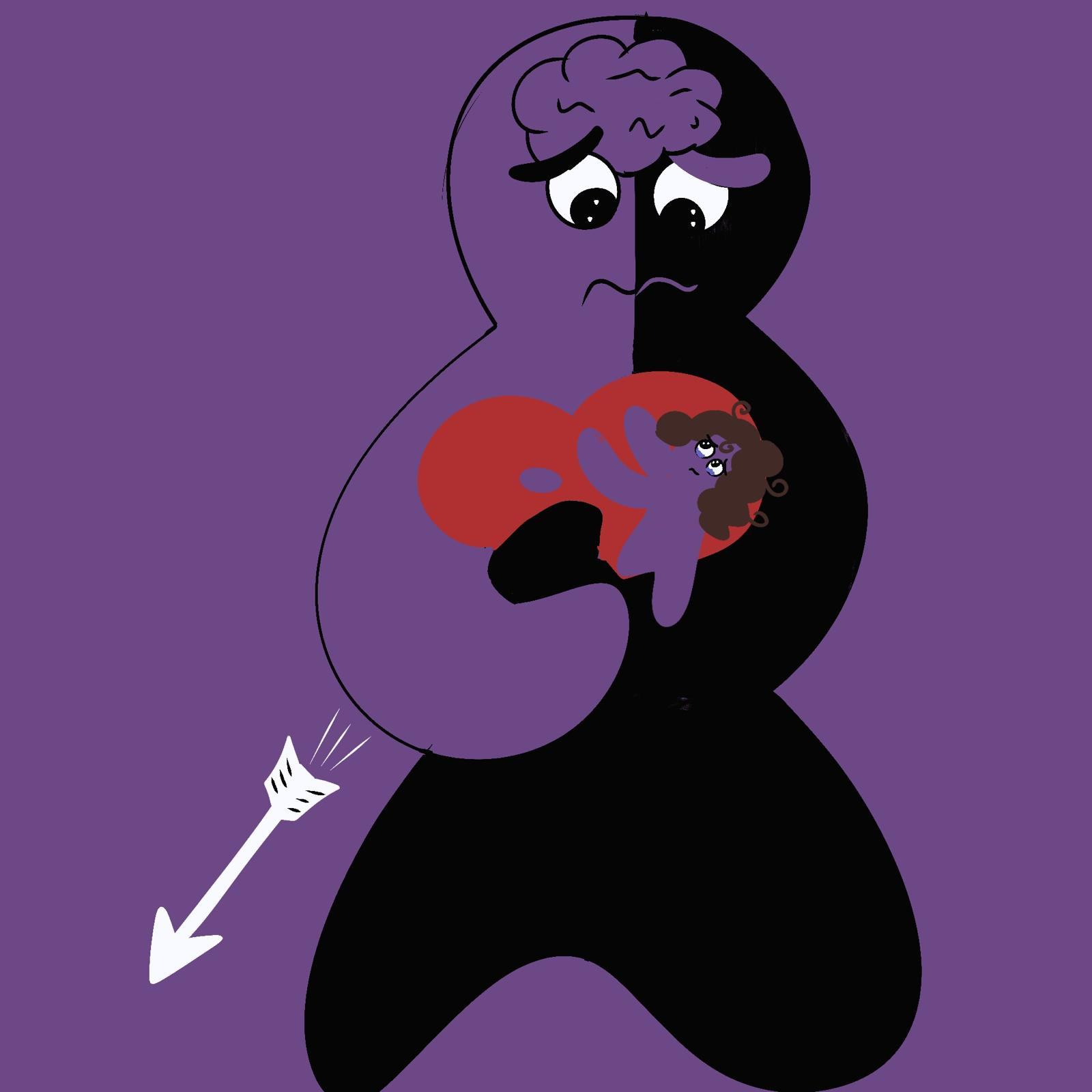
She now looks down at what she couldn’t see before:
That little girl, deeply in pain,
Shoved behind a closed door.
She’s still there stuck in time,
Reaching out for a hug she simply couldn’t find,
She acknowledges the pain felt from her father—
She acknowledges that she was a very hurt daughter.
Rather than searching for that hole to be filled,
By validation from others that leaves her unfulfilled,
She gets to be the one who looks within and loves what she can see,
Not leaving her worth up to others to determine who she needs to be.
Her heart and body begin to fill with that self-energy,
And out the arrow flies, leaving room for love to flow free.
Now that girl can feel all that lay beneath,
And have immense compassion and empathy for all the grief.
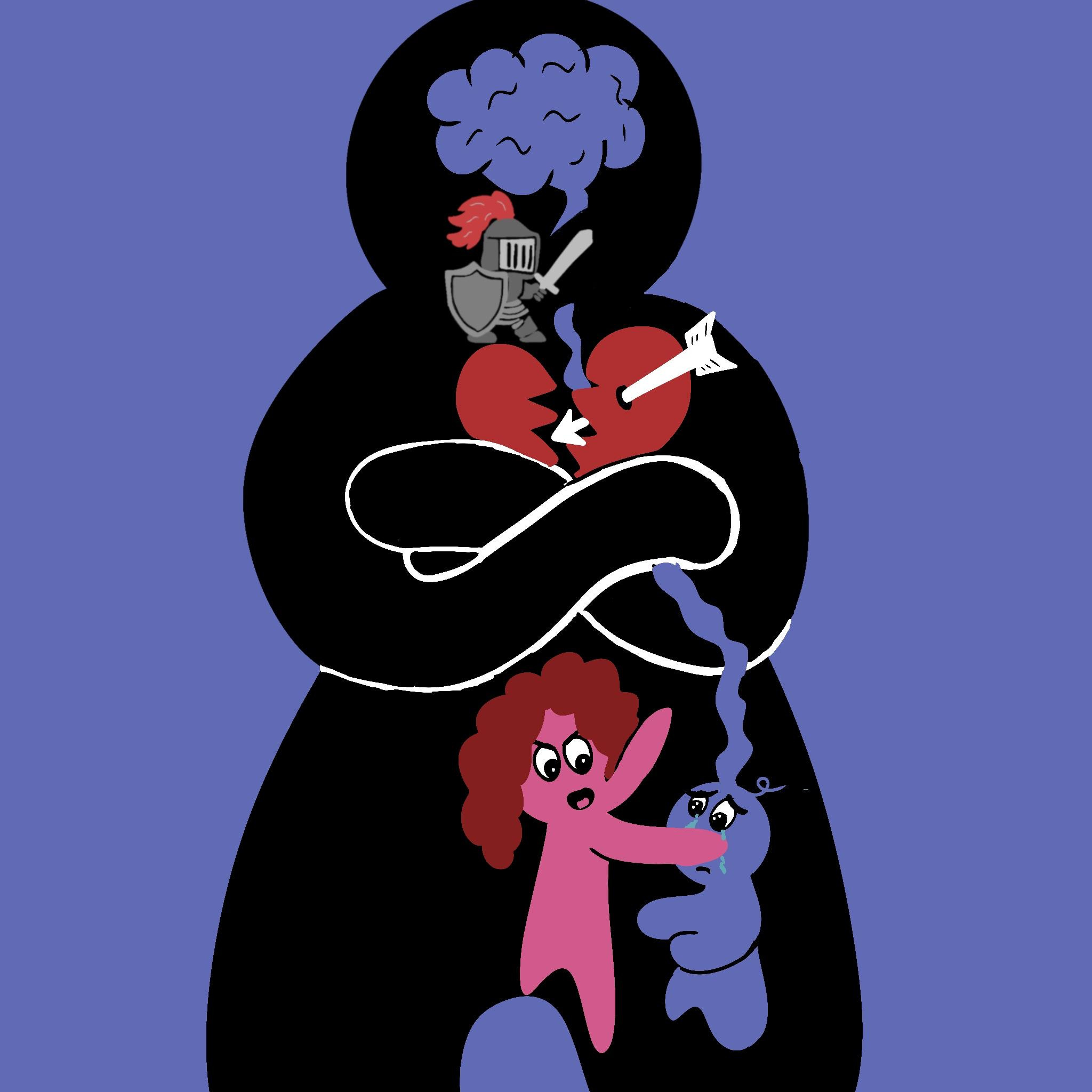
For the dad that was experiencing
A little knight in his own chest,
Who just wanted his little girl to have what’s best.
Fearing that the world would be an unsafe place,
Because that’s what his mother taught him with a slap across the face.
Thinking that his traits wouldn’t be safe to share,
The pain became too much for him to bear.
So that little knight sat in him and stood guard,
Making his emotional exterior a little more hard.
And while that little boy was stuck inside,
His mom, too, had a knight she tried to hide.
She felt like she had no worth
As her mom ran from her, feeling abandoned on this earth
Alone and feeling deceived,
Taught that she wasn’t worthy to receive.
While she carried a lot of pain,
Each generation the trauma became a little more tame.
While her father may not have always accepted who she was,
His fear grew from what he was taught, but he never left her lost.
And while his mother may have left him feeling unsafe,
At least she stayed around enough to give him faith.
Because her mother left her completely alone,
Feeling like a burden, chilled to the bone.
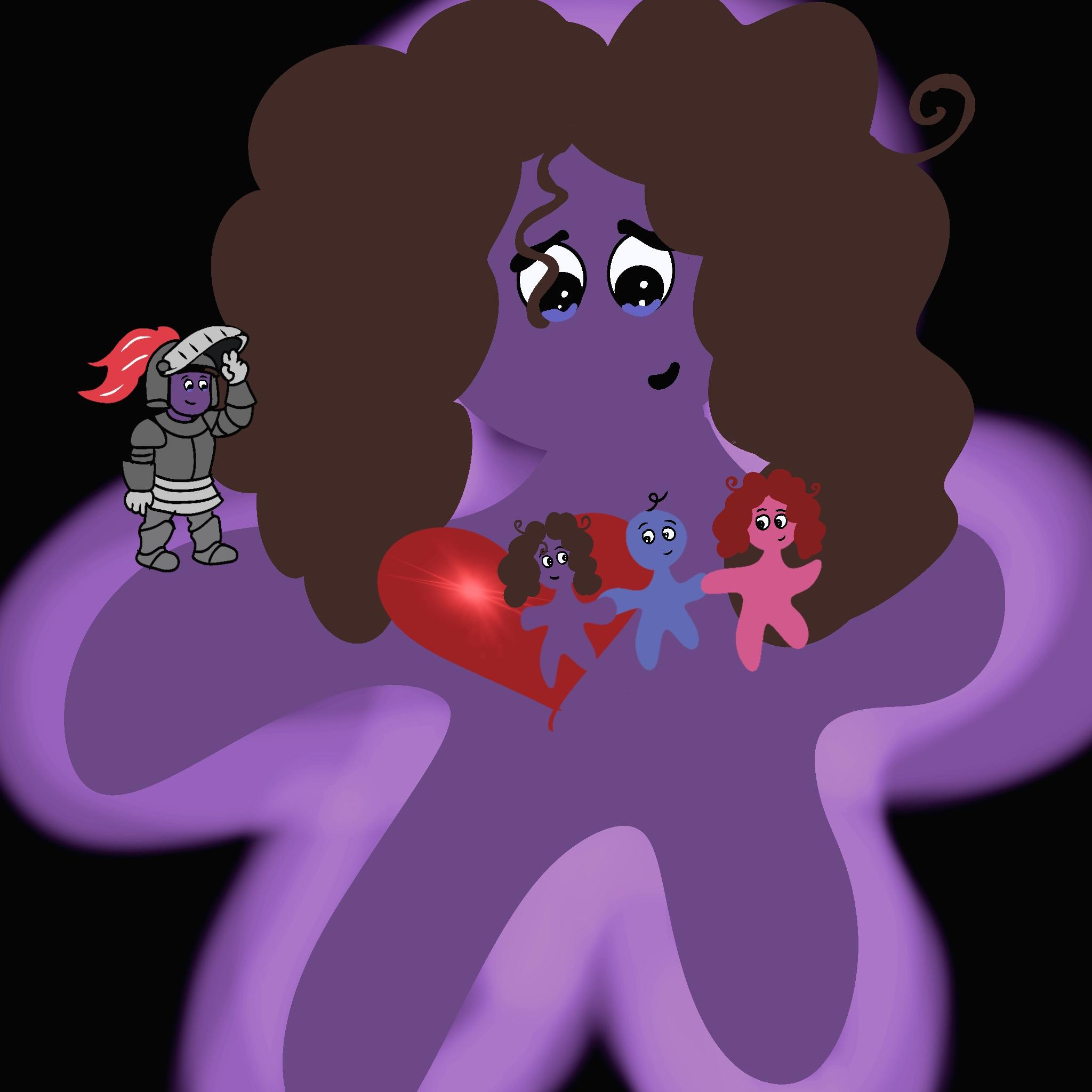
The knight no longer needs to stand guard,
His job is done, he placed his trust in her heart
And now that girl, once sitting in an empty, black space,
Shines from the inside out,
lighting up the whole place
That hole in her heart, glowing from the inside,
Feeling the love for those before her, with nothing to hide.
That got her to this point, to sit here and stand,
As herself once again, holding her own hand.
Having gone through it to show others the key:
That feeling the pain is the only way back to who we’re meant to be.
The Knight Standing Guard, between Our mind and Our Heart
Sitting in therapy recently, I realized I couldn’t feel a damn thing. I knew I felt weird. I knew the “exhausted” feeling sitting heavy in my chest was actually something deeper, but I couldn’t reach it. When asked what was coming up for me, my mind was blank.
I couldn’t feel anything because, underneath the surface, my connection to my own heart was being actively severed.
Many times we truly believe that everything is okay. What we can’t see happening under the surface is that there is a “protector” standing guard. There is a knight standing between our deepest wisdom—our heart, our body, our subconscious—and our conscious mind. When we have a wound, so deep it feels like an arrow shot through a broken heart, our conscious mind believes it’s simply too painful for us to handle. So, it creates this protector to step in and cut off the connection in order to keep us safe.
Built from our ego, these protectors are shields that don’t allow us to access our true selves (this is why I love mushrooms—they literally help us drop all of our ego in order to access that truest self). But the longer we tell ourselves that “we’re fine,” the longer that pain lives inside your body, and as long as it remains unconscious it will run your life, unconsciously.
So maybe you don’t actually consciously feel into that pain, but the pain is still there. Whether it’s the deep ache of feeling abandoned, the sting of being unloved for who you truly are, or the terror of watching a parent be mistreated and living in fear that the world will do the same to you, that wound remains.
You will live your life putting up a front in order to be loved, safe, and accepted, but you are never actually the one being loved. Or, instead of feeling into that original pain, you unconsciously chase a person who brings about that exact same feeling inside of you. You try to “fix” them, or save them, rather than actually just feeling into your own pain and allowing yourself to be the one to love, accept, and take care of YOURSELF.
We tend to downplay our own hurt. We tell ourselves “it’s not that bad,” “I don’t actually care,” or “other people have it worse”—so why should we be hurting? But if you were to fully feel that pain as a kid, you would be so destabilized that it simply wouldn’t be safe. Numbing out is literally a survival strategy.
It shows up in incredibly subtle ways: a parent being disappointed in you, making hurtful comments, or showing you conditional love. It also shows up in terrifying ways: watching a parent in pain, being mistreated, or absorbing the ambient chaos of your home. There is a multitude of ways a kid can be scared and hurt, and so many things they must absorb and adapt to.”
The Cost of Protection
And that knife that cuts me off from my original pain is the exact same knife that cuts me off from myself. And the knife that cuts me off from myself is the same one that cuts me off from fully feeling others. Our sisters, our brothers, our fathers, and our mothers. Our friends. Our partners. Our kids, who are just searching for us to be present, to be connected.
That sneaky little knight that once saved us is actually the very thing severing us from all of our relationships. It drives a barrier between us and the world on top of making us an “other” to ourselves.
The Pain Game: Dodging Our Own Arrow
If we look back through our generations, we see scars cutting a little deeper with each step. Parents only ever wanted what was best for their child. If it wasn’t safe to be them for one reason or another, they tried to protect their kids from that same harsh treatment by making them conform. But if every time they cut themselves off from their pain they have no idea how to tend to it, all they do is continue the cycle of feeling pain, leaving themselves, and putting that pain onto their kid.
It is really understandable to see how and why this cycle continues. But if everyone operates on the assumption that “everyone did their best,” how could you ever truly feel the pain of each person?
We end up using “they did their best” as a way to completely erase our own human experience.
If we constantly use the trauma of the previous generation to excuse the actions of the current one, we fall into the trap of comparative suffering. We turn pain into a competition where no one ever actually wins. Think about it: if your pain doesn’t count because your parent had it worse, and their pain doesn’t count because their parent had it worse, it creates a world where no one is worthy of compassion because nobody is really “all that hurt.”
Intellectualizing someone else’s trauma by saying “they did their best” isn’t empathy at all—it’s avoidance. It’s a way to sanitize the messiness of being hurt. It’s making yourself feel better by avoiding the actual pain, dressed up as being compassionate.
True Compassion
Actually, you don’t know compassion until you love someone who hurt you. You don’t know compassion until you feel the whole process—but to do that, you have to refuse the shortcut.
When you jump straight to “they did their best,” you are looking at their trauma from a safe, intellectual distance. You haven’t let the arrow actually pierce you. True connection is impossible if you skip the anger, the grief, and the betrayal. You have to let the arrow pierce you, acknowledge that you were wronged, and feel the agonizing unfairness of it. Only then can a much deeper empathy be felt, because you realize the people who hurt you were doing the same thing you did, and avoiding feeling that exact same arrow.
It’s only when you finally drop your own shield and let yourself feel the full weight of that wound that something profound happens. You feel an immense amount of pain, but you also feel an immense amount of connection to yourself. And while sitting there, feeling how utterly excruciating it is, you can actually feel a deep sense of empathy for them, because it’s exactly the pain they were running from, except maybe their arrow was even deeper, and the pain cut even sharper and they simply did not have the safety or the resources to confront it.
They couldn’t drop their swords because the environment they were surviving in wouldn’t let them. It wasn’t because they didn’t love you; it was because the terror of facing their own wounded inner child was a luxury of safety they never had.
Now that you have enough emotional safety, tools, and resources to finally drop your shield and confront this monster it is your responsibility to do so. With each generation, they absorbed a little more of the blow. They gave us more and more safety, diluting the trauma bit by bit, until finally, one of us had enough solid ground to stop running, turn around, and heal. And hopefully, in turn, we can return the gift to them.
Dropping the Sword
You can only get there if you don’t run away from your own pain. You don’t have to abandon yourself to forgive them. You don’t have to erase your experience to make room for theirs. Look within yourself at that once-hurt little child—alone, unseen, unaccepted—and be the one to love, see, and accept them.
You can sit there holding your own inner child’s hand, validating your completely justified hurt, while simultaneously looking across the generational divide with deep, authentic empathy. You choose to extend your love toward them not just because “they did their best,” but because you deeply feel their pain and see that they wore the heavy armor long enough for you to finally be able to take it off.
You can then see a part of yourself in everyone. It doesn’t mean the anger never existed, or that your boundaries disappear, but the resentment loses its grip on you. What you feel underneath it is true, authentic compassion for the hardships they themselves carried. The heavy judgment softens because somehow, you see a piece of yourself in everyone—because you’ve finally sat with yourself through it all.
When we get to this place of being strong enough to handle our pain, what we really need is to trust ourselves, and to trust people. We need to trust people to be hurt and still be able to come around to seeing beyond that. We need to trust that our relationships aren’t so fragile that they are only capable of holding deep love when they are without pain.
When you finally allow yourself that hurt, you reconnect with yourself. The knight lifts its mask, and underneath it is just you, trying to protect yourself. And once that sword is dropped, there is finally room for the love to flow freely again.
Continue Reading
Cutting to the Pain: Our Internal Tug-of-War
(The Wisdom of the Crazy Explained)
The Mercy of the Mirror
When the mask finally serves the soul; A Purim Journey from Self-Abandonment to Sacred Reveal
The Only Way Out Is Through
What you avoid will free you — come into the narrow place