The Mercy of the Mirror
When the mask finally serves the soul; A Purim Journey from Self-Abandonment to Sacred Reveal
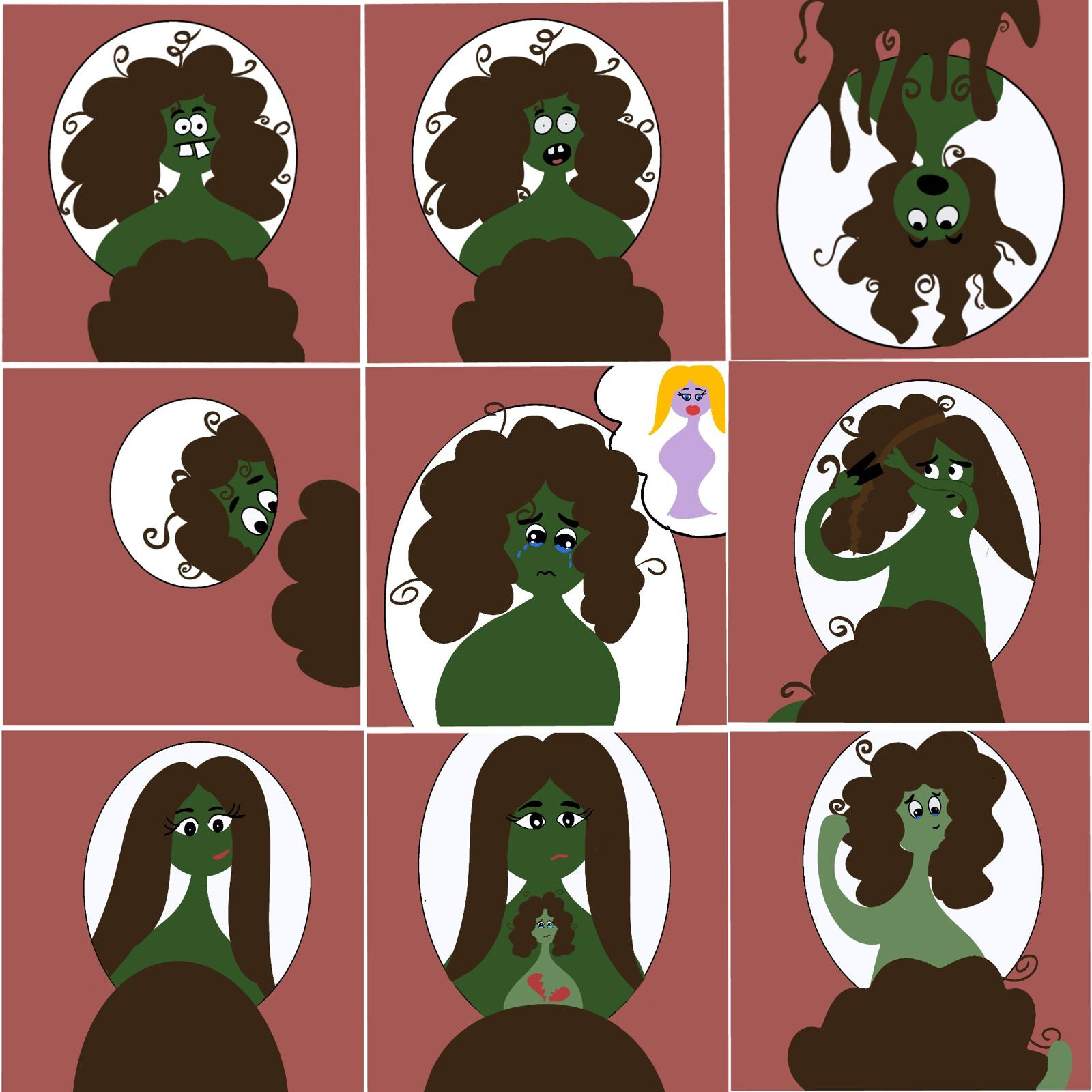
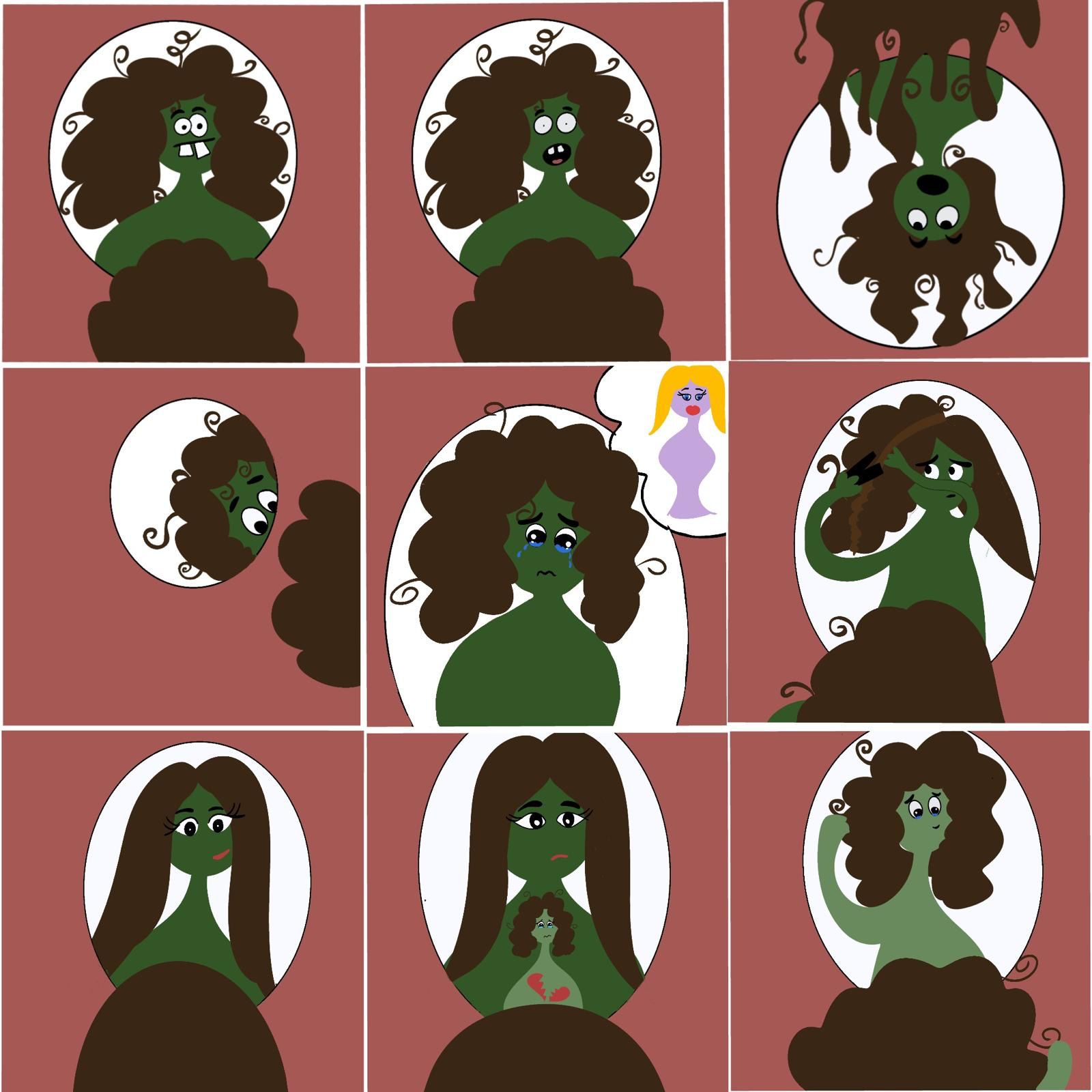
In honor or Purim, I thought it was the perfect time to post this essay and photo series on self acceptance and the role of masks in our lives.
I created a series of photos of a girl, struggling to look in the mirror. When she looks in the mirror she sees herself as some ogre—her hair all crazy, poofy, curly, her skin looking all green, her teeth bucked.
There is a specific kind of pain in looking in the mirror with sadness, with a feeling of disgust, with burning jealousy toward others and with wanting to be someone else. It is a heavy weight, but it is a weight I have come to realize is actually a mercy compared to the alternative. There is something far worse than hating what you see: it’s looking in the mirror and not even recognizing the person standing there anymore. It’s the heart-wrenching realization that the girl staring back at you isn’t you, she is a stranger you’ve carefully constructed to take your place. It’s the moment you realize that you were the abusive parent; you were the one who shunned that girl, severed her from yourself, and left her in the dark. The realization that the world never actually got to see you, because you never gave her a chance to be seen.
But the “ogre” you see in the mirror isn’t just about a physical flaw. The green skin and the wild curls are a representation of all the parts of our true selves that we’ve been taught to find “unpalatable.” The ogre is our loud laughter, our deep sensitivities, our “too-muchness,” our messiness, and our rawest emotions. She is the version of us that doesn’t fit into a neat, socially acceptable box. She is afraid to even look at herself; she appears peaking through the side of the mirror, simply afraid to look. In sadness and pain, she imagines another girl, one with blonde, perfectly straight hair, beautiful blue eyes, a curvy body. The other girl appears to be everything she wants. She starts to cry in realizing that she is none of these things that she so badly wants to be.
She begins to change herself in order to reflect how she wants to appear, what she so badly wants to be, but isn’t. In these photos, the act of straightening her hair is merely a metaphor for all the ways we “straighten out” our personalities to be more quiet, more “normal,” or more “agreeable.” She stops feeling her deep emotions. She cuts herself off from her disgust and shame. She cuts herself off from her hurt, and in doing so she cuts herself off from, herself. She wears this sort of “mask” and the mask brings her some sort of relief, but the relief only lasts for some time, because underneath that relief is the hurt self that she left behind to sit alone and cry.
She fragmented herself. And the thing is she may appear one way on the outside, but that real self, she’s still inside of her, alone and hurting. Her job isnt to leave her in the dust, her job is to turn inward, bring her back out and look at her in the mirror. Sit with her in the pain. And over time she may begin to notice her skin begins to look a little less green, she finds an appreciation for those wild curls, and she begins to feel a sense of wholeness.
In the Purim story, we call this V’nahafoch Hu —the “flipping” or turning upside down. The day meant for destruction became the day of salvation. My own V’nahafoch Hu happened when I realized that the parts I thought were “ogre-like” were actually the source of my light. The green skin and the wild curls weren’t the things keeping me from being beautiful, they were the very things that made me beautiful because they were real, relatable, and vulnerable. By embracing that girl in the mirror, I stopped just “existing” and started radiating. I realized that when I stop hiding the “ogre,” I actually become a magnet for joy and genuine happiness. It’s a frequency that attracts the right people and the right opportunities into my life—the kind that love me for the curls, not the straight hair. One where she is radiating inside and out. Where she doesn’t forget who she is.
My point in making these photos is that sometimes what looks like relief is actually self-abandonment. It isn’t always black and white; what we do doesn’t matter as much as our relationship with ourselves in the process. We are often told that if we don’t like the reflection, we should change the vessel, that plastic surgery, losing weight, or changing our look to better fit in will drastically improve our lives. And depending on the goal, they might. But when those things are done to escape the person in the mirror, they aren’t improvements, they are just more palatable masks.
The path to wholeness isn’t through changing the body to match a feeling or changing the personality to match a standard; it comes from a place of radical self-acceptance. It is the belief that the ‘ogre’ in the mirror doesn’t need to be fixed, cured, or changed, she needs to be embraced and loved for who she is. Trying to become a stranger isn’t a solution; it’s just a form of self-betrayal. From my own experience, nothing beats the feeling of being your raw, unedited self and letting people love you for that. The praise I got for being ‘perfect’ felt like a lie, but the love I get for being ‘me’ is not even comparable.
For me straightening my hair, excessively running, wanting to dress a certain way, shrinking myself, being less goofy, being more “girly,” stopping caring about my passions, trying to fit in—these were all things that brought me “temporary relief,” but only because I was running from myself. I was running from the pain and shame I had about my true self. Those things wont ever bring you long term growth or happiness because in the process, you have just left yourself behind.
If we learn how to really be there for ourselves, even when we have shame around who we are, our appearance, our thoughts, our behaviors, we will be able to live a much better life than if we try to reach for relief.
Being Didi, Devon, Debbie—they brought me relief, but they didnt bring me happiness. They brought me praise, but they didnt bring me pride. They brought me a false sense of confidence, but not the real kind. They brought me love, but I was never the one that got to feel that love, because the love wasnt for me. I had left that girl behind.
What they did bring me though, was wisdom. They taught me that self-betrayal can be mistaken for beauty. But real beauty, and real meaning, is what begins to radiate when you stop abandoning yourself and become fully, undeniably you.
Purim is all about wearing masks for a purpose. We wear costumes on Purim precisely to remind ourselves that the body, the clothes, and the social status are all just “garments.” The only thing that is permanent is the Neshama (soul), and that is the truest self that lives inside of us, that always remains at our core. It’s about everything flipping, it’s about how our greatest struggles in this world can quickly become our greatest gifts to it. There is no great redemption in the story, the only thing that changes is that the Jews know who they are. And to know who you are, that is the greatest redemption of all.
When you know who you are you can hold on to it and not lose yourself even when in certain situations you need to wear a mask. You can step into any environment, you can be around anyone, and you can be firm in your knowing of who you are without changing. Last year during Purim, I wanted to do anything BUT wear a mask. I had so much trauma from wearing masks my whole life that I just wanted the world to see who I truly was. I didn’t trust myself to stay firm underneath the costume.
This year I have a different perspective. I’ve had the privilege of truly and fully stepping back into who I truly am and being so firm in my knowledge and precisely for that reason I’m okay to sometimes have to wear masks. Queen Esther’s holiness didn’t come from her external beauty; it came from the fact that while she wore the crown of a Persian queen, she never let the palace walls make her forget she was a daughter of Israel. She didn’t become the mask; she used the mask to save her people.
I’m firm in who I am because I’ve learned to love and trust that girl. When we spend our lives listening to outside voices over ourselves, or spend our lives wishing we were other people, it’s easy to know who we are but maybe want to simply forget it, wear the mask in hopes of covering what we believe to be ugly underneath it all.
The mask feels safer than the mirror. Because if I can become something else, prettier, smarter, more impressive, more palatable, then maybe I won’t have to sit with the parts of me I learned to reject. Loving yourself isn’t pretending you don’t see your flaws. It’s choosing not to abandon yourself because of them.
And once you love and trust that girl, really trust her , the masks lose their power. You don’t wear them to hide anymore. You wear them knowing that sometimes it’s necessary to get to places the person underneath wants to go, to deliver a message that she carries, or simply to keep yourself safe while you’re on your mission.
The mask is no longer an escape, but a tool. The difference is that now you know that underneath it, she’s still there. And the mask is there to serve her , not replace her.
When the mask serves the self, it’s power. When the self serves the mask, it’s abandonment.
Continue Reading
Cutting to the Pain: Our Internal Tug-of-War
(The Wisdom of the Crazy Explained)
The Knight Standing Guard, between Our mind and Our Heart
How our inner protectors sever our connections, and what it takes to reclaim true empathy, first for ourselves, and in turn for others
The Only Way Out Is Through
What you avoid will free you — come into the narrow place