The Walking Juxtaposition
Introducing my inner cast of characters — we all have parts, we all have shame
Let’s begin.
PART I: THE FRAGMENTING Chapter 1: The Walking Juxtaposition
I laid in bed feeling totally shattered, like a complete shell of a human. I felt both empty and overflowing with pain—a paradox that became my reality. The total silence pierced my ears like screams. The quietness felt far more excruciating than the constant yelling, more damaging than the slaps across my face, and more degrading than the hateful whispers calling me a worthless slut. It was finally over. I was finally “free,” yet somehow I felt more lost and broken than ever. In the shadows of my quiet bedroom, I tried to make sense of what my life had come to be. Different fragments of myself popped into my head—who I am, who I once was, who I tried to be, and who I was forced to become. How did that strong, confident, stubborn, powerful little girl who knew her worth and cherished her gifts end up here? But little did I know, this wasn’t even rock bottom. It was only the beginning of a long and arduous road ahead—a journey of collecting these broken fragments and piecing them together, not to become whole again, but to become whole for the first time in my life.
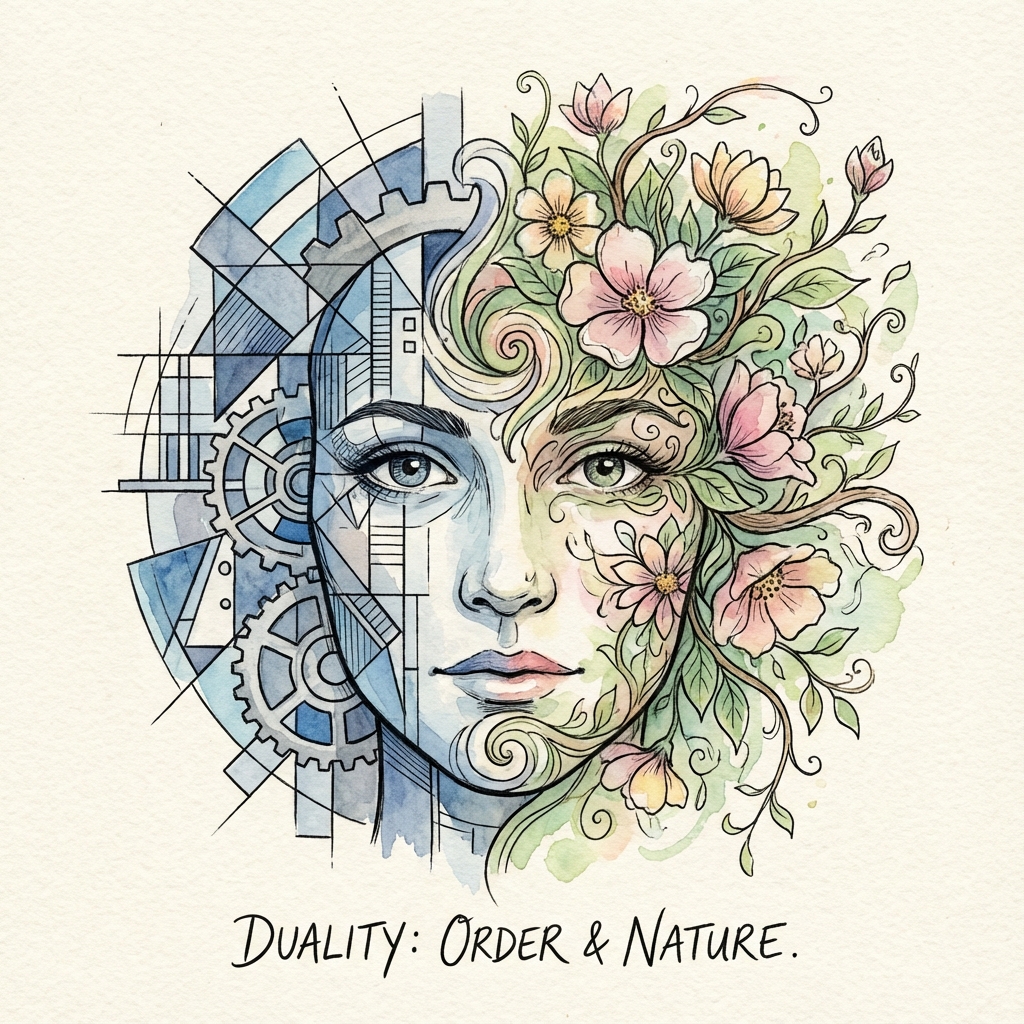
I spent a lot of my life feeling like a fragmented human, with two opposing sides of myself. I used to call myself a walking juxtaposition, because every part of me seemed to create its own loud and stubborn adversary. How fitting for someone who was always looking to argue. I would joke about how ridiculous I was in an attempt to cover up how deeply painful this experience truly was. I grew up goofy, creative, free-spirited, extroverted, stubborn, messy, highly emotional, highly sensitive, hyperactive, transparent, passionate—and a bit of a “tomboy”. Which also meant I could look lazy, insensitive, disrespectful, loud, obnoxious, inattentive, contrary, headstrong. I was loved for all of my oh-so-charming qualities, but I wasn’t exactly a poster child—at least not for the version of success my father hoped would protect me in this world.
These attributes always seemed lovable enough to keep me from totally compromising myself… until middle school. That’s when I started craving approval—for teachers to like me, for boys to think I was cute, for my parents to value me, and regardless of any of that, to still find a way to love myself. Although I thought I knew the value of these different parts of myself, they didn’t always earn me the treatment I so badly craved.
Things got confusing when different parts of myself received different responses from those around me. This inconsistency created the need for more parts to emerge, eventually splitting me into what felt like two opposing sides of myself.
I had one side who I like to call DAN.
While DAN was cherished for her humor, goofiness, sarcasm, extroverted spirit, sensitivity, intuition, strong opinions, and unique personality, these traits also carried shadows. Even though I deeply valued these aspects of myself, sometimes I also wished they could all just disappear.
DAN was essentially a quirky fusion of three distinct personalities:
DENNIS—the hyperactive, messy tomboy with endless energy. Creative, always cracking jokes, blurting ideas the second they arrive. Her room (and mind) is a perpetual tornado zone, she specializes in impersonations and being a fucking weirdo and she can’t shut up with all of her thoughts, ideas, and insights.
DOLLY—the spiritual and emotional one. She sees people as souls, is deeply perceptive, craves meaningful conversations, and is extremely prone to emotional overload. She specializes in poetry and getting lost in her own thoughts. She feels alone in her depth, sensitivity, and existential questioning and because of that faces a sense of loneliness. Finding motivation to get up and go go go and do do do is low on her to do list, probably because she doesn’t have one, she goes wherever the wind blows, or maybe more accurately, wherever her emotions take her.
DOUBLE D—the outspoken advocate of brutal honesty. She wasn’t afraid to question things, and walk to the beat of her own drum—what some liked to call “talking back” or “stubborn”. Fiercely passionate, unapologetically herself, never afraid to tell someone like it is, even if it hurts. She knew her worth (maybe too much), may come off as insensitive but truly is speaking her mind in service to her relationships, perhaps lacking some humility but is refreshingly genuine.
Together, these three certainly made life interesting.
Dennis was always talking in class, a goofy tomboy who was disorganized and messy. Her friends and family loved her for her spirited humor, but teachers disagreed, which made her feel incapable, stupid, and less than.That judgment soon extended to a concerned father, who cared a little more about grades than jokes and, in his own way, wanted the best for me—hoping I would do well in school, stay healthy, be likable, and carry myself in a way the world would respect. On top of that Dennis was not ladlylike and the typical girl boys would talk about liking. Dennis was none of these. Boys liked her—but only as a friend. And friendship wasn’t enough leaving her feeling unworthy.
Dolly preferred solitude, writing poetry, doodling, and reflecting. Her passions were dismissed as meaningless, even though they brought connection and beauty to those around her. I often felt as though my dad didn’t fully see the value in her art or writing at the time, but I also knew he genuinely appreciated how much she loved her family and how deeply she cared for those around her. To some, Dolly appeared “lazy”, but she was busy being profoundly connected to her inner world and the inner worlds of those around her.
Double D challenged everything—rules, religion, social norms. She was praised for her honesty, but punished for her defiance. Her bluntness could at times hurt people. Her loud passions and strong beliefs made others uncomfortable. But she was unwaveringly real and gave others permission to be real with her in return. She wasn’t afraid to be vulnerable or judged by others, because she trusted her own experience of the world.
What was I supposed to do? How confusing that while parts of these selves were not what my father, my teachers, or the boys around me wanted me to be, parts of them really were deeply loved and cherished. It felt as if these parts were valued deep down yet also met with fear and discomfort. They were qualities teachers could appreciate in a person, but hate in a student. They were qualities boys wanted in a friend but that they don’t find attractive for a girlfriend. They were qualities a parent wants in a daughter yet fears they won’t be enough to survive in this harsh world. I still cherished Dan—Dennis, Dolly, Double D—but the world’s mixed response made me doubt what I’d once thought were gifts.
The part of me that desperately loved my family, that wanted to be loved and accepted and to make my parents proud was left shattered.
The doubts about myself started to creep in, I didn’t feel that Dennis, Dolly, and Double D could hold it together anymore. My older brother was diagnosed with ADHD when I was 11 and I started to read more and more about it. A lot of these traits felt like so much of the struggles that Dennis, Dolly, and Double D faced. And there was actually a cure to all of these things? Some way to wash away the madness, feelings, chaos, shame? I asked to get tested.
I swallowed my first Vyvanse at 11 years old, ready to erase every fragment of myself that had caused me pain. And with that, DIDI officially took over. DAN and her parts faded into the background.
DIDI (doer dan)—the shiny new girl who gladly compromised herself to earn the validation that DAN couldn’t. DIDI was the admired for her discipline, humility, beauty, ambition, and self-control, but these traits also carried shadows. Even though now she was finally celebrated by teachers, parents, and boys she liked, DIDI herself felt hollow. She wasn’t one person but a careful construction—a mask stitched together from three protectors, each born to counteract the messy authenticity of DAN. Together, they formed a version of me the world could finally applaud:
DANIELLE—the pristine good girl with a hunger for approval. Polished, feminine, achievement-oriented, and eager to please. She specializes in neat handwriting, perfect grades, running to stay slim, and being the kind of girl boys talk about being attractive—not just being a cool friend. Always put together, she trades Dennis’ chaos for order, her humor for sweetness, her authenticity for applause.
DEVON—the disciplined powerhouse. Strong, hardworking, relentlessly driven, and emotionally armored. She specializes in math, study sessions, workouts that push her to the edge, and the art of appearing unbothered. She trades Dolly’s depth for certainty, her poetry for problem sets, her intuition for measurable success.
DEBBIE—the endlessly humble peacemaker. Gentle, conflict-avoidant, excessively kind, and self-erasing. She specializes in reading the room, biting her tongue, and putting everyone else first. She trades Double D’s conviction for doubt, her tenacity for softness, her loud “I know” for a quiet “maybe they’re right.”
Together, these three certainly made me feel more “accepted” more “normal” finally I wasnt “too much” “too weird” “too loud” , getting in trouble, but where was I? Where was the Dani I always knew?
Danielle thrived in the classroom where Dennis once struggled. Teachers praised her stillness, neatness, responsibility, and politeness. She felt more confident that boys would see her as attractive once she slimmed down and smiled sweetly rather than joking around like a wild creature and making disgusting faces. Her father approved of her discipline and ambition. But while Danielle earned approval, she often felt hollow, unsure of what she actually liked or wanted. Her value came from being liked and praised—not from being herself.
Devon was admired for her hard work and control. She was the girl who actually poured time into studying, who aced exams, who went for runs and lifted weights. To adults, she seemed unstoppable, the model student, athlete, and daughter. But beneath the strength, Devon had abandoned her softness. Feelings were inconvenient; intuition was unreliable. She hid her vulnerability under sweat and achievement, a fortress that kept her safe but isolated from herself.
Debbie was beloved for her kindness. Parents, teachers, and friends praised her humility and generosity. She was the girl who made peace, who apologized first, who never asked for too much. People found comfort in her gentleness. But Debbie’s sweetness came at a cost—she erased her own truth. Where Double D would have spoken out, Debbie stayed quiet. Where Double D would have trusted her knowing, Debbie second-guessed. She kept others happy, but inside she was disappearing.
It’s not that these new parts weren’t real, they were absolutely real, but the shame and the medication didn’t just surface new parts, they suppressed the beautiful, messy ones that already existed. Dan still surfaced, especially when off medication, and deep down, I still valued her much more, although my actions would seem to say otherwise. This led to a complete and total fragmentation of my entire identity.
Eventually, it all broke. I had a manic episode. Everything became clear. Or maybe more accurately everything became so clear that I had a manic episode. And then everything became even more clear. Chicken or egg. Likely both.
To my surprise, my therapist informed me all about Internal Family systems and I soon learned that the whole fragmented parts thing I felt my whole life wasn’t anything new—it was already a therapeutic model called Internal Family Systems. In true Dani fashion, I researched everything about it. And not just because I was hypomanic, but because it resonated so deeply. It was like reading the last page of a book that had already been written about me.
IFS showed me that these parts of me weren’t mistakes or flaws, they were roles. Protectors. Exiles. Managers. Each with a name, a purpose, and a place. DIDI, DAN, Dennis, Dolly, Double D—they all suddenly made sense.
Continue Reading
Be Your Own Creature
The mess is where our hidden gems live
The Roots and the Tree Inside Me (and You)
Blending a Jewish idea (Adam I/II) with my own "parts". The roots that know and the tree that shows and what it means to live an integrated, purposeful life.
לך לך (Lech Lecha) — Go To Yourself
The journey of leaving comfort and familiarity, moving to Israel, and following one's calling despite fear