The Hypomanic Experience
or what I like to call, unshackling the Soul
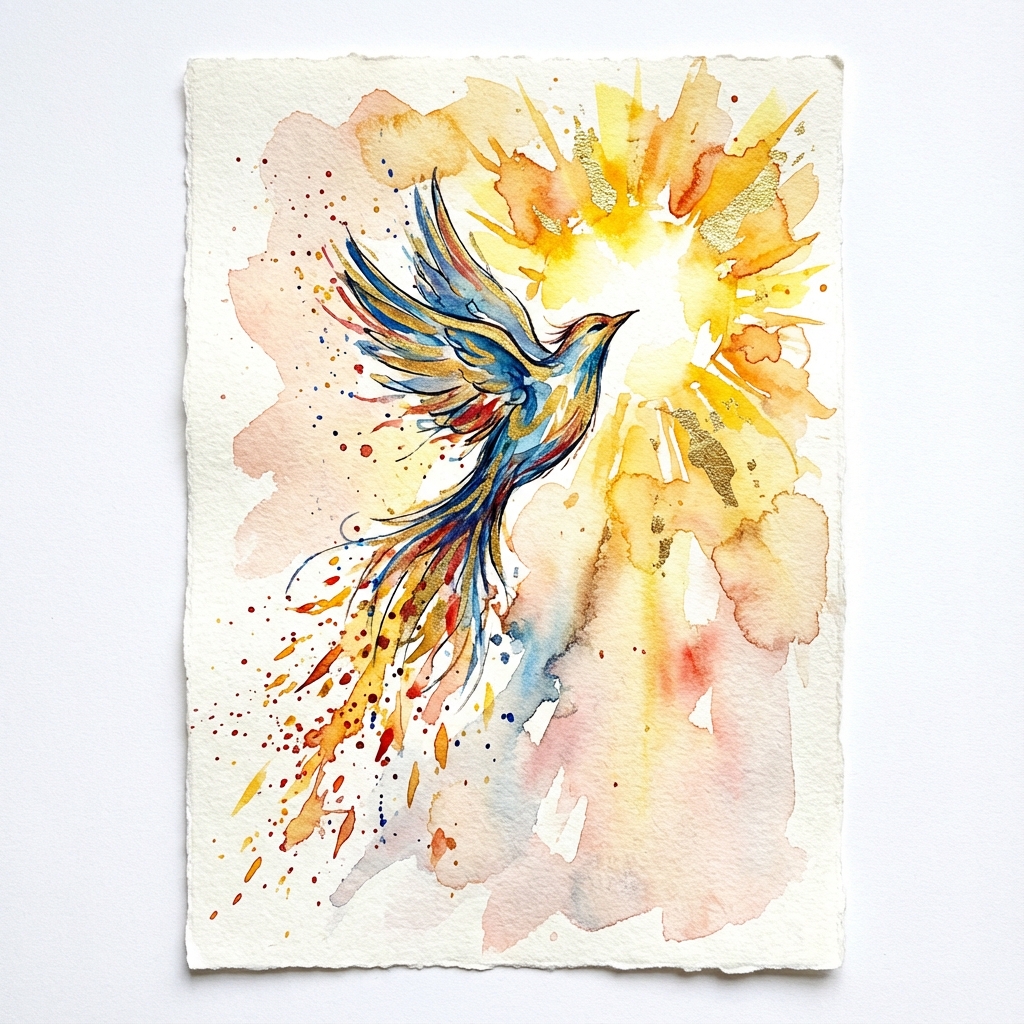
It feels like hypomania comes from this identity struggle. Like this trauma around losing yourself so much to a point your soul has been given no other choice but to erupt—fierce and relentless—demanding to be seen, like it’s been waiting a lifetime for its moment to breathe.
And when you look at the traits commonly found in people who are diagnosed with bipolar disorder, it makes sense. So many of them have these in common:
Sensitive – Feel everything more deeply, emotionally and physically.
Empathetic – Pick up on other people’s emotions easily, often without trying.
Intuitive – Have a strong inner knowing or gut feeling about things and people.
Creative – Often drawn to art, music, writing, or big ideas; see connections others don’t.
Emotional – Experience intense highs and lows, often quickly.
Energetic (in waves) – Can have bursts of drive, motivation, or passion—followed by periods of exhaustion or shutdown.
Passionate – Care deeply about things that matter to them; can become consumed by a cause or idea.
Overthinking – Minds are busy, fast-moving, and hard to slow down, especially during hypomania.
Impulsive – Make quick decisions or take risks when emotions are high.
Highly self-aware – Constantly analyzing, questioning, reflecting on their behavior, thoughts, and identity.
Easily overwhelmed – Emotionally, mentally, or sensorily—especially when masking or suppressing feelings.
You feel every little thing, and I mean everything, the good, the bad, and everything in between, you don’t get a choice. You feel all of the expectations of society to conform, you feel all of the judgement, you feel all of the pressure, you know so much that you know all of the things that you don’t know. Your chances of losing authentic parts of yourself are going to be far higher than other people because of the precise fact that you can see more, you can feel more,
And you’re more likely to shift yourself to meet others where they are. You shape-shift. You mold. You please. You read the room, meet the needs, and play the part. And after all the conforming, suppressing, people pleasing, you completely lost track of which parts of you were real and which parts were made from mere survival until one day you finally just break. That’s when hypomania emerges—not as something random, but as the brain’s way of resolving the deep, internal conflict between who you’ve had to be and who you actually are. The hidden self finally refuses to stay hidden.
Oftentimes we see mania as “random” like we don’t know when it will happen or what triggers it. It honestly doesn’t feel “random” at all to me… I feel like I can put my finger on exactly what it is.
It happens when parts of my true self—my authentic, intuitive, creative self—finally get seen.
Not just seen, but praised. Validated. Recognized by the outside world in a way they never have been.It feels like there’s a direct link between achievement, belonging, and your authentic self—
like the moment those deeper parts of you receive validation, something unlocks and is rawly exposed to the world.
Not the version of you that was built for approval—that part is used to praise; it was designed for it. I’m sure many people who experience this feeling get lots of praise for the parts of themselves that they created exactly for that reason. Praise for being smart, competent, kind, high achieving, put together. But that praise is meaningless, its hollow, it goes in one ear and out the other even though its what you worked so hard for. Its not actually you that is getting the praise, its a highly curated version of yourself that literally was made expecting the praise, the praise isn’t special if that part was exactly designed for receiving it.
Deep down, though, you always knew. You always had this quiet, stubborn sense that your authentic self—the unfiltered, intuitive, emotional, creative, deeply you part—was far more powerful than any curated version of yourself. Far more Valuable. Far more Capable of something deeply meaningful, even extraordinary. But that knowledge lived in you like a whisper in a hurricane. The louder voice, the one shaped by fear, rejection, and the desperate need to belong, kept shouting over it. That louder voice convinced you that you were too messy, too impractical, too weird, too childish, too emotional. So you silenced the whisper. You suppressed what you knew in your bones. Not because you didn’t believe it—but because the world made you question if it would ever be safe, or successful, to be that person.
So when your authentic self—the messy, intuitive, emotional, creative, unfiltered you—gets recognized? That’s different.That part of you never expected praise. So when someone sees it, and not only sees it but celebrates it?It creates this wild internal click—like, “Holy shit… I was right all along.”
Its like someone finally saw your entire life struggle and also agreed that you are what’s special, who you are and what you stand for are actually the true talents and gifts that this world needs. And because that part of you has been buried so deep and only praised under very very silent whispers in the back of your mind that value those parts but dont let them be seen by the world, it makes the praise for them feel revolutionary. And then the core of you that you’ve been betraying and hiding in some dungeon says “seee!!!!!!!!!!!!! I knew I was right, I knew it and you didnt listen” and then you become hypomanic. You are full of joy and energy and urgency. Like extreme urgency to a point where your body doesnt let you stop and it lets your true authentic self run wild and free for god knows how long because its been so trapped and locked down in a dungeon for again god knows how long. Your soul finally was set loose and its so afraid that you are going to chain it down again that it feels like it has this limited time to do everything it needs while its free. Not only does it not know when it will end but it also feels like it needs to make up for all of this lost time. And then theres that part of you that has rage, rage for ever doubting yourself, for ever feeding into societies beliefs, for ever betraying what you knew deep down but didnt know strongly enough. And this pain towards yourself is so deep that instead of the rage being directed at yourself, it can become directed at other people because its so much easier to blame external forces for making you feel this way than it is to face the truth: that the final deciding vote was yours, and your bid was against yourself….
This state of creativity bridges the gap between your authentic self and achievement.It’s like your true self is finally coming out—but in a way that breeds so much insight and creation, and you know that what you’re creating is special.Special enough to lead to the external validation, “success,” and belonging you’ve always craved. For the first time, it feels like your actual self can achieve the kind of success you always knew was possible. And now, other people can finally see its value too. Even though you’re no longer conforming to societal standards, in some ways, you still are—because you’re still searching for that same validation.But this time, it’s not the mask being praised. It’s you.
By channeling your true self into creative things– writing, art, projects–you’re watching that part of you finally achieve a socially recognized form of success.The same parts of yourself you always wanted to win, craved to succeed. that happening drives you into a heightened state of joy and urgency.Because this time, the stakes feel real. This time, it’s you.
Normally your success feels conditional, you can only succeed if you conform, mask, or hide parts of yourself, but hypomania totally flips this narrative. You can succeed precisely because you are authentically expressing yourself and that creates a rare alignment: between external validation, your internal sense of worth, and the truth of who you are.
The success and recognition that come with hypomania confirm what you’ve always hoped might be true: That your hidden self is not only capable, but deeply worthy of being seen.It’s almost like your brain is trying to heal its own deep psychological wound—flipping years of self-doubt into this overwhelming sense of confidence in who you really are.
And along with that confidence comes something else—A sense of not just societal belonging, but even societal superiority—as a way to cope with the deep pain of never fully fitting in.You’re no longer succeeding in spite of your true self.You’re succeeding because of it.And the very qualities that were once labeled weaknesses or liabilities are now being celebrated as profound strengths or assets.
On top of all of that, there’s this deep sense of pride.Pride that you finally unlocked her. That you unshackled her from the chains. That you came around to showing your true self—and not only did it happen, but instead of tilting their heads in confusion or disgust…
the world saw her beauty.They didn’t sit back and gasp in horror—they stood up and applauded in awe.
At the age of 24, My soul was released from its dungeon, maybe what some would call in a way that was “a little too passionate, a little too fierce, and a little too fast…..” but to me,there is no such thing as too much, too loud, too urgent when something has been ignored, suppressed, buried for years—it doesn’t whisper when it returns, and it shouldn’t. It comes back kicking and screaming, unapologetic, demanding to be seen, because look where the small little whispers got itself for all of these years? Still trapped. Still unheard. Still locked away… in a dungeon.
There are parts of hypomania that are truly beautiful, truly soulful and deeply meaningful, but there comes a point where beauty turns to chaos. Energy turns to electricity. And those once highly cherished thoughts? You’re now begging them for mercy—pleading for them to leave you the fuck alone, swarming you, haunting you, you close your eyes praying for sleep, and instead endless reels of movies are playing over and over again in your head.Like the darkness itself has turned into a cinematic screen. As if you are on an intense mushroom trip—except you don’t recall ever taking the damn mushrooms, and you have no idea when (or if) it will end. And suddenly… that dungeon you once clawed your way out of doesn’t sound so bad after all. Because being trapped in a dungeon, at least with your head still attached to your body sounds better than wanting to rip your head off your own body and escape your own mind because the thoughts won’t stop, the emotions won’t regulate, your nervous system has turned against you and you’re being dragged down your own personal version of a living hell, wondering how in the world you’re supposed to make it through another day—or if you even want to.
It’s like your soul finally broke free… but now it’s sprinting, screaming,running rampant through your mind and body as if its trying to punish you for what you did. And the very thing that felt like your liberation starts to feel like your undoing.
It’s kind of ironic—even poetic—that after 12 years of being on Vyvanse, living fragmented, masked, disconnected from myself, I ended up in what they call a manic episode.My psychiatrist told me mania is often triggered by Vyvanse. What she meant, clinically, was that stimulants can send the brain into overdrive. But to me, Vyvanse triggered the mania in a far more deep and profound way.Vyvanse was the thing that slowly severed me from my true self. It helped me perform. Stay on track. Fit in. Be productive. But it also muted me. Suppressed me. Kept me surviving in a life that never fit.And it’s that long, painful loss of self—that constant betrayal of who I really am—that I believe actually triggered the mania.
At the time, I had finally started trying to get off Vyvanse. But one morning, before one of my last days at a job I hated—a job I only tolerated because Vyvanse numbed me enough to get through it—I took it again. Not because I wanted to, but because my soul was still merely just whispering. I wasn’t even planning to quit yet. A part of me was still holding on. Still compliant. Still masked. Still full of fear. And in a way… it was the mania that allowed me to finally rip off the band aid and quit. Without it, I would have stayed even longer. Still smiling. Still dying inside. Still betraying myself in the name of stability.
That’s the irony that wrecks me. Because when I was “stable”—when I was quiet, agreeable, “mentally healthy”—I was dead inside.My soul was locked away. That was the version of me that got praised. That was the version of me that earned approval. That was the version of me that wasn’t clinically insane.
But when my soul ran free—when it was loud, messy, chaotic, “too much”—The first time I wasn’t masking. The first time I felt like my soul was speaking in full color, with urgency, and with truth. And for that, I was immediately diagnosed with bipolar disorder. And told me I needed more medication. Different medication.
It was poetic in the most tragic, and grim kind of way. That everything leading up to that moment—twelve years of ADHD medication, masking, performance, betrayal of self, grappling with medicine and trying to live a life of authenticity without it—culminated in a soul finally bursting free… and being pathologized for it and told i needed to be put right back on – other medicine.
When I asked my doctor deep questions about bipolar disorder, none of the things I had researched came up. Nothing about potential causes.Nothing about trauma, identity, achievements, perfectionism, masking, or emotional sensitivity. She made it sound like something random—something you just have, without knowing why or when it will show up but that many times at the age of 25 it starts and then you never know when youll have another episode. You may never have another episode again in your life or you may have hundreds, but the answer, of course, was to start medication. It gave me flashbacks—Flashbacks to blindly trusting the ADHD doctor who only saw what medicine could do, and not what it could take from me.How it muted me.How it made me functional, but numb.How no one asked what I was really going through—they just wanted to manage the symptoms.
Let me be clear: I’m not saying no one should take medication.I know some people truly need it in order to function. I know it can be life-saving for certain situations when getting to the root cause may take too long and be too difficult and too much of a risk for someone. I’m not anti-meds. And to be even more clear—I started taking them. After months of wrestling with the decision. After endless back-and-forths in my head, trying to figure out whether it was the right thing or whether I was betraying myself all over again. Ultimately, I decided I couldn’t live a stable life without them at the time, but with the hope that one day, I will be able to get to the root and be able to live a life without them, and for now I have gotten to that point. But I also know life is dynamic and certain events can shake you.
And that’s okay. What I’m saying is: it should never be the only option.It should never be the first step without real conversations. And it should never be used to silence a soul that’s just now learning how to speak.
I am against this idea that we can heal people without ever questioning what hurt them.I believe there is always a deeper cause—And if we ever truly want to heal, we need to stop slapping diagnoses on people and start letting people be vulnerable, be emotional, be a mess, be in pain. Start asking questions. Start wondering why someone feels the way they feel, not just how to suppress it. Yes, medicine can help. But it should be given with caution, with care, with the understanding that it doesn’t automatically mean there’s something wrong with you. Sometimes, it just means you’ve been carrying something for too long.
That’s why I struggle with how we treat mental health in this world.That’s why I hate how easily we believe anyone with a degree or an MD after their name, as if credentials replace curiosity. That’s why I chose social work over psychology.
Because I don’t believe in just managing symptoms.I don’t believe these things are “random.“I don’t believe people are born broken.
I believe people become overwhelmed when they’ve been forced to abandon their true selves for too long.And if we ever want to help them find their way back—we have to start listening.
And I believe that what looks like instability…is actually the beginning of something genuinely real, someone’s brain actually doing themself a service, trying to get someone back in touch with themselves
Because at the end of the day, what I know in my bones is this:
The world doesn’t need more perfect diagnoses, or labels, or drugs labeled as medicine to numb themselves.It needs more safe spaces, it needs more honesty, vulnerability, acceptance and understanding for people to actually be comfortable opening up, showing their mess, showing their shame, their vulnerability, their hurt, so that they can finally come home to themselves.
Continue Reading
The Wisdom of the Crazy
Learning to stop outrunning the pain and finally meet the Ninja face-to-face
The Courage to Be Human
Extensive exploration of ADHD, comorbidities, masking, trauma. Breaking rigid molds and embracing messy, creative selves through struggle
Learning to Focus My Light
Introduction to a creative memoir, discussing ADHD, the hypomanic episode, and the decision to heal differently